 Abdur Razzak
Beauty and wellness services are increasingly using AI to analyse images, organise product recommendations, and personalise digital experiences. The Global Wellness Institute’s 2026 Aesthetic Health Initiative trends include hyper-personalised aesthetics using AI and biomarkers, alongside wider themes such as longevity aesthetics and the relationship between skin and psychological wellbeing.
These trends indicate growing interest in personalisation, not proof that every AI skincare tool is accurate or medically useful. A skin-analysis app may help organise observations, but it cannot replace a qualified clinician’s assessment when a person has a medical concern.
What Is AI-Personalised Skincare?
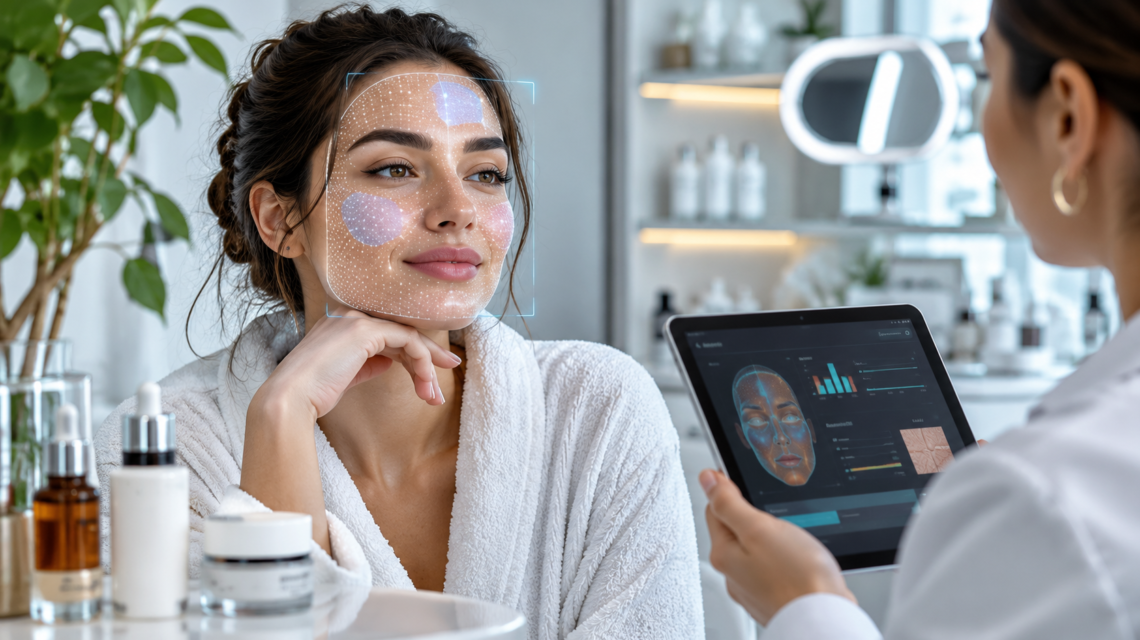
AI-personalised skincare tools may use a questionnaire, uploaded image, device sensor, or other information to suggest products or routines. Some systems compare visible features against patterns in their training data; others simply use a decision tree or product-matching algorithm. The term “AI” does not reveal how reliable the assessment is.
Why Personalisation Is a 2026 Beauty Trend
Consumers often want routines that feel relevant to their goals, skin preferences, budget, and tolerance for ingredients. Digital tools may help organise choices and explain product information. The Global Wellness Institute’s trend framework also highlights the intersection of aesthetics, biomarkers, and broader wellbeing, though the exact evidence behind each service should be evaluated individually.
What an AI Skin Tool May Help With
- Organising a skincare questionnaire and stated preferences.
- Explaining product ingredient lists in accessible language.
- Comparing products against user-defined criteria.
- Tracking non-diagnostic observations over time, if the user chooses to do so.
What It Cannot Reliably Do on Its Own
- Diagnose a skin disease from a selfie.
- Determine the cause of a rash, lesion, or sudden skin change.
- Guarantee that a product will work for a specific person.
- Replace professional advice about treatment, medication, or persistent symptoms.
How to Evaluate an AI Skincare App
- Check who developed the tool and whether its claims are independently evaluated.
- Read the privacy policy before uploading face images or health-related information.
- Understand whether images are stored, shared, or used to improve the service.
- Check whether recommendations are sponsored or linked to products the company sells.
- Look for clear limitations and a route to professional support when needed.
Personalisation, Privacy, and Bias
Skin images can be sensitive personal information. Lighting, camera quality, skin tone, makeup, and image processing can affect what an algorithm detects. Ask whether the tool has been evaluated across relevant populations and conditions. Be cautious when a provider does not explain its methods or limitations.
Frequently Asked Questions
Can AI analyse my skin accurately?
Performance depends on the tool, image quality, data, and intended task. A consumer app should not be treated as a medical diagnostic device unless it has the appropriate validation and regulatory status for that use.
Can AI recommend a skincare routine?
Some services can organise preferences and product information into suggestions. Check ingredients and product claims independently, and seek qualified advice for medical concerns.
Are AI skincare apps safe for privacy?
That depends on how the app collects, stores, shares, and deletes images and personal data. Review the policy and permissions before uploading sensitive information.
What is hyper-personalised aesthetics?
It is an approach that aims to tailor aesthetic services or product choices to individual characteristics, potentially using AI, biomarkers, and other information. Its benefits and evidence vary by application.
Conclusion
AI-personalised skincare reflects a wider move toward digital personalisation in beauty and wellness. These tools may help consumers navigate product information, but their claims need careful evaluation. Privacy, population coverage, commercial incentives, and medical limitations matter as much as the interface.
Sources and Further Reading
- Global Wellness Institute: Aesthetic Health Initiative Trends — 2026 trends include AI and biomarker-informed personalisation.
Health note: This article is general information, not medical advice. Seek advice from a qualified healthcare professional for symptoms, diagnosis, or treatment decisions.