
 Abdur Razzak
Product discovery is changing as shoppers use AI tools to compare prices, shortlist products, and understand buying options. DHL eCommerce’s 2026 Black Friday research, based on surveys of 29,000 online shoppers across 29 countries and 5,800 e-commerce businesses across 28 countries, reports that many consumers have used or plan to use AI during seasonal shopping. The report also highlights delivery and returns as important parts of the buying decision.
For marketers, this points to a broader shift: brands need to help people make informed choices before they reach a product page, while ensuring that the information available to AI tools is accurate and consistent.
What Is AI-Powered Shopping Discovery?
AI-powered shopping discovery happens when a shopper uses an AI assistant or agent to find products, compare alternatives, interpret specifications, or evaluate trade-offs. Some experiences only provide recommendations. More advanced shopping agents may perform additional steps, but whether they can complete a purchase depends on the platform, user permissions, and market.
Why This Matters for Retailers
When shoppers discover products through a conversational interface, they may compare several brands before visiting a store or marketplace. Missing specifications, inconsistent availability, unclear delivery terms, and weak product descriptions can make a product harder to evaluate.
DHL’s report describes AI-assisted purchasing as an emerging part of Black Friday behaviour and notes that shipping options are a point at which some shoppers abandon a purchase. These results are tied to the survey’s sample and seasonal context; individual retailers should measure their own customer journey.
Make Product Information Easier to Understand
Use complete product data
Publish accurate product names, model numbers, dimensions, compatibility, variants, warranty terms, availability, and price information. Keep feeds and product pages aligned.
Explain differences clearly
Comparison pages should use equivalent criteria and avoid vague superlatives. Explain which product suits which need and disclose the limits of the comparison.
Keep shipping and returns visible
Show delivery estimates, costs, return windows, and exceptions before checkout. Policies should be clear for each market and fulfilment method.
Build accessible content
Use descriptive headings, structured specifications, meaningful image descriptions, and readable FAQs. Do not hide essential product details inside images.
How to Prepare for AI-Assisted Commerce
- Audit product titles, identifiers, attributes, and variant relationships.
- Check that structured product information matches the visible page.
- Keep inventory, price, shipping, and returns data current.
- Publish practical buying guides that explain criteria rather than simply promoting products.
- Make customer support and policy information easy to find.
- Monitor how shoppers discover products and which questions remain unresolved.
Trust and Consumer Protection
AI recommendations can influence the products people consider. Brands should be transparent about sponsorship, paid placement, reviews, and limitations. Retailers should not manufacture reviews, disguise advertising as independent advice, or make claims that cannot be substantiated.
Academic work published in 2026 has also examined how AI agents may take on parts of the consumer journey and what that means for consumer agency. These papers offer conceptual frameworks and research questions; they should not be presented as proof that autonomous shopping is already common in every market.
Traditional E-Commerce vs AI-Assisted Discovery
| Area | Traditional path | AI-assisted path |
|---|---|---|
| Discovery | Search engine, marketplace, or retailer site | Conversation or recommendation interface may shape the shortlist |
| Comparison | Customer opens multiple product pages | Assistant may summarise comparable details |
| Decision | Customer evaluates options directly | Customer may use advice or delegate selected steps |
| Purchase | Marketplace or retailer checkout | Still depends on authorised payment and merchant integrations |
Metrics Worth Monitoring
- Product data completeness and feed errors.
- Organic and referral discovery by source.
- Qualified product-page visits and assisted conversions.
- Search queries and on-site questions that reveal missing information.
- Checkout abandonment by delivery and returns step.
- Customer support contacts caused by inaccurate product information.
Frequently Asked Questions
Will AI agents replace e-commerce websites?
There is no evidence that websites are about to disappear. AI may influence discovery and comparison, while retailers still provide product details, fulfilment, policies, and customer service.
What product information should retailers prioritise?
Accurate identifiers, specifications, compatibility, price, stock status, delivery terms, returns, and warranty information are a practical starting point.
Can AI tools buy products automatically?
Some platforms are exploring delegated shopping actions, but the capability and permissions differ. A recommendation tool should not be assumed to have authority to make a purchase.
How can small retailers prepare?
Start by improving product data, page clarity, availability accuracy, delivery information, and customer support. These improvements help both human shoppers and automated discovery systems.
Conclusion
AI-assisted product discovery raises the value of trustworthy product information. Retailers do not need to predict every future agent platform to prepare. They can make their catalogues accurate, policies understandable, comparisons fair, and buying journey transparent today.
Sources and Further Reading
- DHL eCommerce: The New Formula for Black Friday 2026 — survey-based report covering shoppers and e-commerce businesses.
- From E-Commerce to AI Commerce — conceptual research on the consumer journey and AI agents.
- Google Marketing Platform: November 2026 update — current platform announcement.
Editorial note: AI shopping capabilities and retailer integrations vary by provider, country, and user permissions. Do not promise autonomous purchase features unless they are confirmed.

 AI Agents: What They Can Do, Where They Fail, and How to Use Them Safely
 AI’s Growing Power Demand: Data Centers, Electricity Grids, and the Energy Challenge
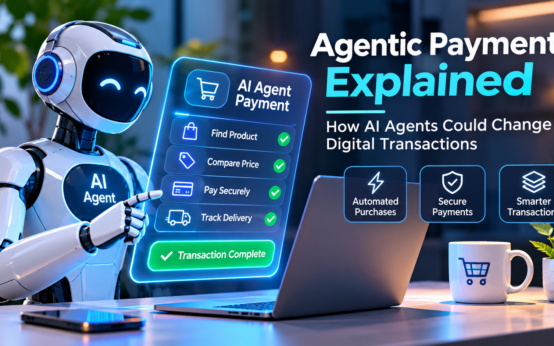 Agentic Payments Explained: How AI Agents Could Change Digital Transactions
 AI Search and Social Search in 2026: How People Discover Information
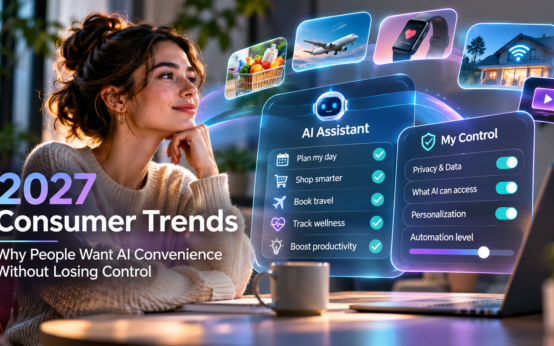 2027 Consumer Trends: Why People Want AI Convenience Without Losing Control
 ChatGPT in 2026: Features, Memory, Projects, Search & How to Use It